Can sleeping in separate rooms help your relationship?
When separate bedrooms may protect sleep, what the research can and cannot say, and how couples can preserve closeness while changing the arrangement.
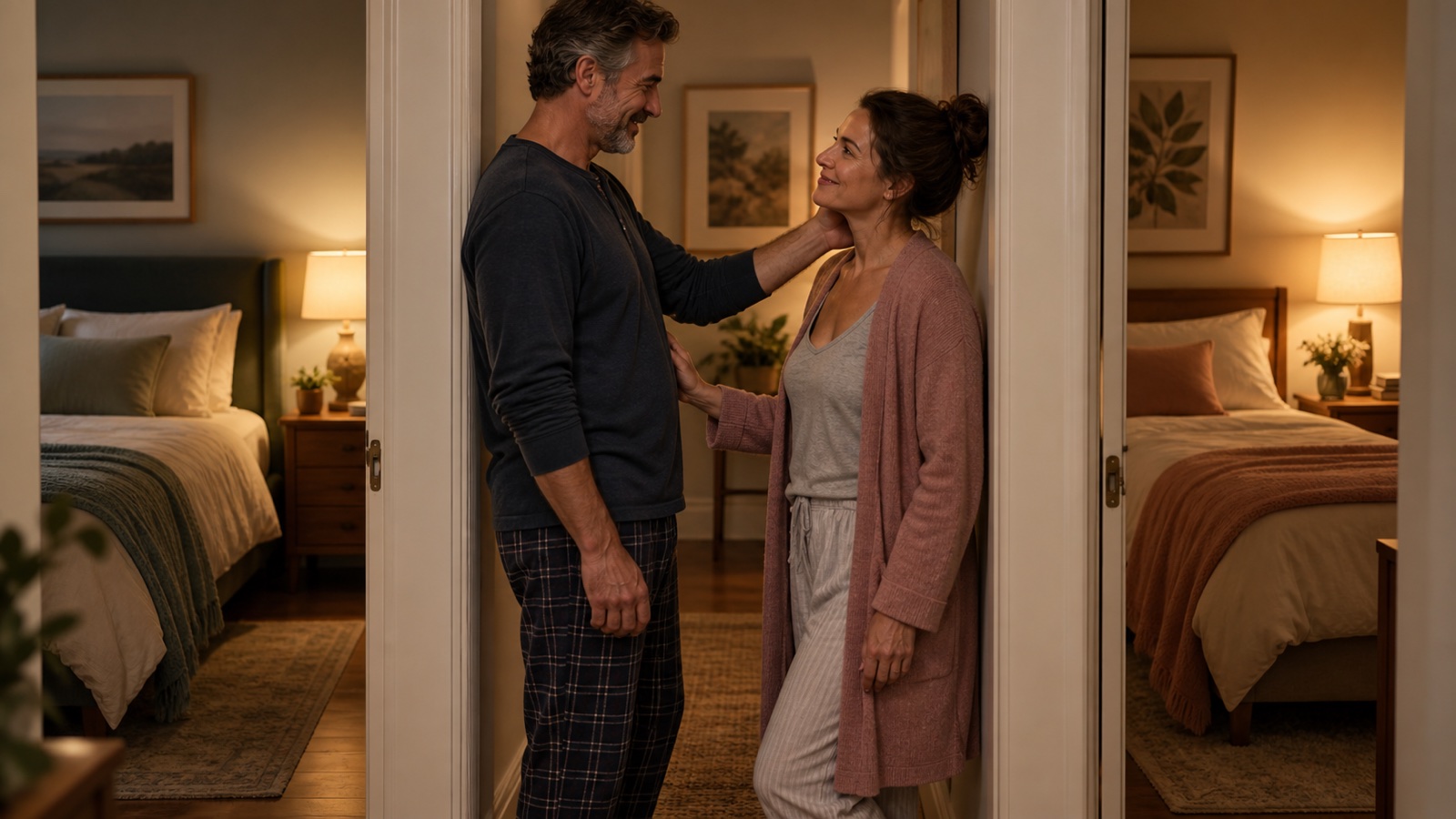
- A shared bed isn’t a relationship test, and separate sleep isn’t automatic evidence of distance.
- Research links sleep and relationship quality, but it doesn’t prove one bedroom arrangement is best for every couple.
- Treat snoring, gasping, insomnia, pain, and other sleep problems rather than making a room change the entire care plan.
- If you try separate rooms, make the agreement explicit and protect affection, conversation, and sexual connection on purpose.
It’s 2:17 a.m. Your partner has rolled over, taken the blanket, and begun snoring with the confidence of a small appliance. You’re staring at the ceiling, calculating how lovingly a person can relocate to the guest room without making it a constitutional crisis.
Sleeping separately can help some couples sleep better. It can also feel rejecting, lonely, impractical, or simply unnecessary. The useful question isn’t whether healthy couples share a bed. It’s whether your arrangement supports sleep and connection for the two actual people living in it.
A bed is furniture, not a relationship certificate
Many couples attach meaning to the shared bed: closeness, safety, sex, conversation, and the small comfort of another person breathing nearby. Those meanings are real. They’re also not guaranteed by matching pillowcases. You can share a mattress and feel miles apart, or sleep down the hall and remain deeply connected.
The phrase “sleep divorce” doesn’t help much. It turns a practical experiment into a verdict before anyone has even moved a charger. If one partner hears “I need sleep” and the other hears “I don’t want you,” the room assignment isn’t the only conversation.
I’ll often ask couples to separate the sleep problem from the meaning problem. What wakes you? What does separate sleep represent to each of you? You can’t negotiate well while those questions are wearing the same trench coat.
The research doesn’t crown one correct arrangement
Sleep and relationships affect each other. A 2025 systematic review and meta-analysis found that better relationship quality was associated with better sleep, while conflict was associated with poorer sleep. Those findings are mostly associations. They can’t tell us whether a shared bed improved the relationship, a good relationship improved sleep, or both.
Bed sharing may have benefits for some people. A small laboratory study found more and more-stable rapid eye movement sleep when couples slept together, along with sleep-stage synchronization. A broader review found an interesting mismatch: people often reported sleeping better with a partner even when objective measures sometimes looked worse.
A 2026 systematic review also found that partner disturbance is a real feature of co-sleeping research, shaped by movement, sleep-disordered breathing, insomnia, and social factors. The evidence is varied and direct studies of chosen separate bedrooms are limited. Anyone selling a universal rule is making the data wear a much larger hat than it owns.
Find the actual midnight offender
Start with the problem, not the room. Is it snoring, kicking, different temperatures, alarms, shift work, insomnia, pain, a baby monitor, pets, light, sound, or one person answering email in bed? A larger bed, separate blankets, earplugs, a fan, different bedtimes, or moving the phone may solve a narrower problem with less emotional freight.
Loud snoring, witnessed pauses in breathing, gasping, morning headaches, high blood pressure, or severe daytime sleepiness can suggest sleep apnea and deserve medical assessment. Separate rooms may protect the partner’s sleep, but they won’t treat the airway. They can even hide the witness who noticed the breathing pauses.
Persistent insomnia deserves its own care too. Cognitive behavioral therapy for insomnia is an evidence-based treatment, and its plan may include changes to time in bed and what happens there. A spare room can be useful during treatment, but it shouldn’t quietly become the only intervention because the waiting list was annoying.
Separate sleep works better when it’s chosen together
Unilateral relocation after a fight can feel like punishment. A mutual plan sounds different: “We’re both exhausted. Let’s try sleeping separately for two weeks, keep our evening time, and check what changes.” That sentence has a reason, a duration, and a return conversation.
Decide the details before bedtime makes everyone less diplomatic. Which nights? Which room? Is the door open? Where do morning cuddling, sex, reading, or late-night conversation happen? What signals “come join me” and what signals “I really need uninterrupted sleep”? Clarity protects both autonomy and affection.
Don’t force equal enthusiasm. One partner may feel relieved while the other feels rejected. The relieved partner doesn’t need to apologize for needing sleep, and the hurt partner isn’t ridiculous for missing closeness. Name both experiences without making either one the enemy.
Protect the connection that used to happen by accident
Shared beds create incidental contact: a foot finding another foot, ten quiet minutes after the lights go out, a morning joke, an unplanned invitation. If you sleep separately, some of that won’t happen automatically. Build a small bridge on purpose.
You might spend 20 phone-free minutes together before separating, say goodnight in person, keep one slow morning a week, or make affection explicit rather than waiting for proximity to do the work. Don’t turn intimacy into another household checklist. Do notice whether you’ve removed the only reliable doorway to it.
If separate rooms feel safer because there’s intimidation, coercion, sexual pressure, or violence, this isn’t a sleep-hygiene puzzle. Prioritize safety and confidential support. A locked bedroom door isn’t a complete safety plan.
Run an experiment, not a referendum
For two weeks, track bedtime, awakenings, daytime sleepiness, irritability, affection, and how connected each of you feels. Keep the notes short. You’re looking for a pattern, not assembling evidence for a closing argument.
At the end, ask what improved, what got worse, and what needs treatment. Maybe separate sleep helps on work nights and sharing feels good on weekends. Maybe the better answer is treating apnea or insomnia. Maybe you sleep wonderfully apart but need to rebuild evening closeness. Flexible arrangements are still real arrangements.
Make room for practical constraints. Not every home has a spare bedroom, and a couch isn’t kind to every back. Separate blankets, a temporary foldout bed, alternating who gets the quieter room, or protecting a few recovery nights may be the available experiment. If one person always absorbs the discomfort, the arrangement isn’t neutral just because everyone calls it practical.
Check the emotional result without demanding a cheerful answer. “Do you feel more rested?” and “Do you still feel wanted?” are separate questions. If you can’t discuss either one without contempt, threats, or shutdown, couples therapy may help you work on the conversation rather than litigating the mattress.
You don’t have to defend your bedroom to an imaginary committee. You do owe each other honesty about what the choice means, what it costs, and whether both people still feel invited into the relationship.
If sleep loss or relationship distress has left you feeling hopeless, unsafe, or suicidal, call or text 988 in the United States. If there’s immediate physical danger, call 911 or go to an emergency department. A bedroom arrangement can support rest, but it can’t carry a crisis by itself.
The bottom line: Separate bedrooms can be a caring response to incompatible sleep, but they aren’t a universal cure or a relationship diagnosis. Identify treatable sleep problems, choose the experiment together, and protect the forms of closeness that matter to both of you.
Sources: Cao and colleagues, couple relationships and sleep systematic review and meta-analysis, Sleep Medicine Reviews (2025); Madison and colleagues, partner disturbance in co-sleeping systematic review, Sleep Health (2026); Drews and colleagues, bed sharing and rapid eye movement sleep, Frontiers in Psychiatry (2020); American Academy of Sleep Medicine, systematic review of behavioral and psychological treatments for chronic insomnia.
Can different sleep schedules hurt a relationship?
How to protect closeness without forcing the same clock.

How do you reconnect when your relationship feels like roommates?
Why efficient teamwork can crowd out felt connection.
Should couples go to bed angry?
When pausing a fight is wiser than forcing a tired resolution.
Are sleep and relationship stress feeding each other?
A free 15-minute intro call can help you decide whether psychiatric care fits the next step.